
From stars to galaxies
In the Dūrbin gallery you will see objects such as nebulae, galaxies, star clusters and planets. Let's learn what these are. We will start small, with the life of one star, and work outward: to the planets around it, the clusters stars are born in, and the galaxies that hold them all. Then we will ask how we know any of this, and meet light, which carries all the news from the sky, and the telescopes and cameras that catch it.
Chapter 1
The life cycle of stars
Stars look as if they never change. But every star has a life story: it is born, it shines for a very, very long time, and one day it runs out of fuel. How the story goes depends on one thing, how heavy the star is to begin with.
A star is born in a nebula
Space is not empty. Drifting between the stars are giant clouds of gas and dust. A cloud like this is called a nebula. It is mostly hydrogen, the lightest stuff there is. Inside the cloud, gravity quietly pulls the gas into clumps. A clump gets smaller, tighter and hotter, until a glowing ball forms in the middle. That baby star is called a protostar.
The baby star keeps squeezing and heating up. When its middle reaches about ten million degrees, something amazing happens: tiny bits of hydrogen crash together and stick, making helium and a huge burst of energy. This is nuclear fusion, and it is what makes a star shine. Click. The star has switched on.
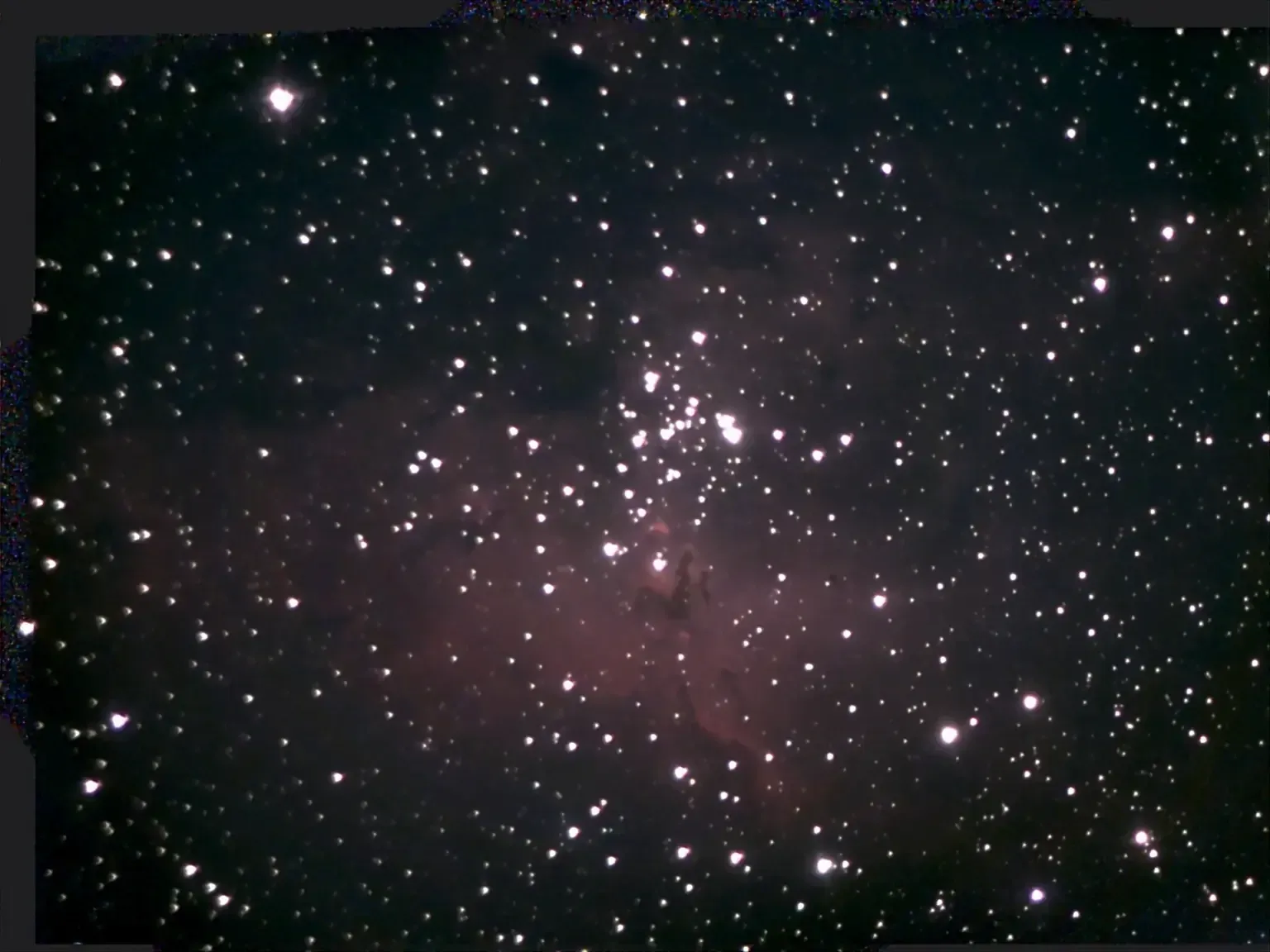
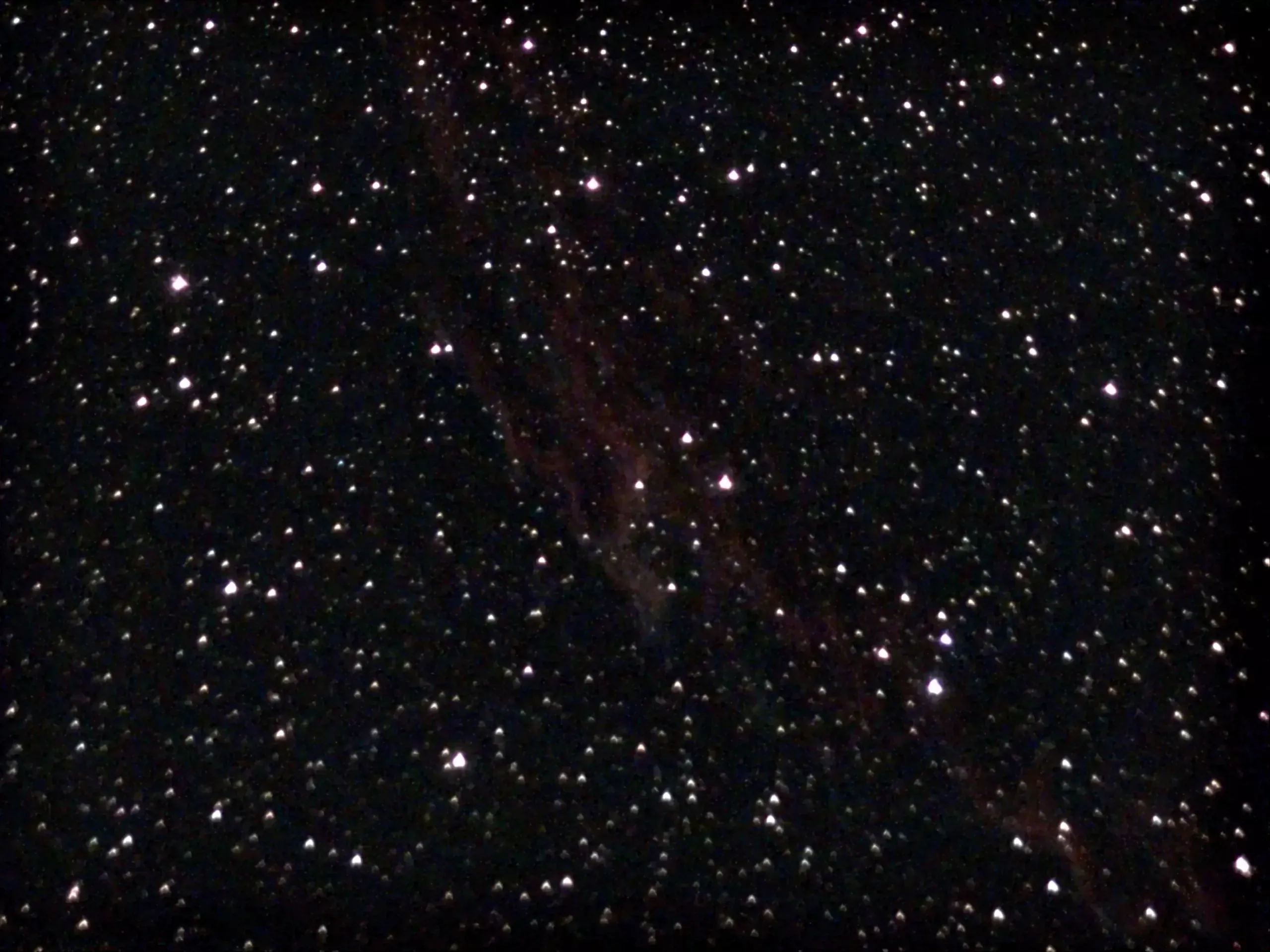
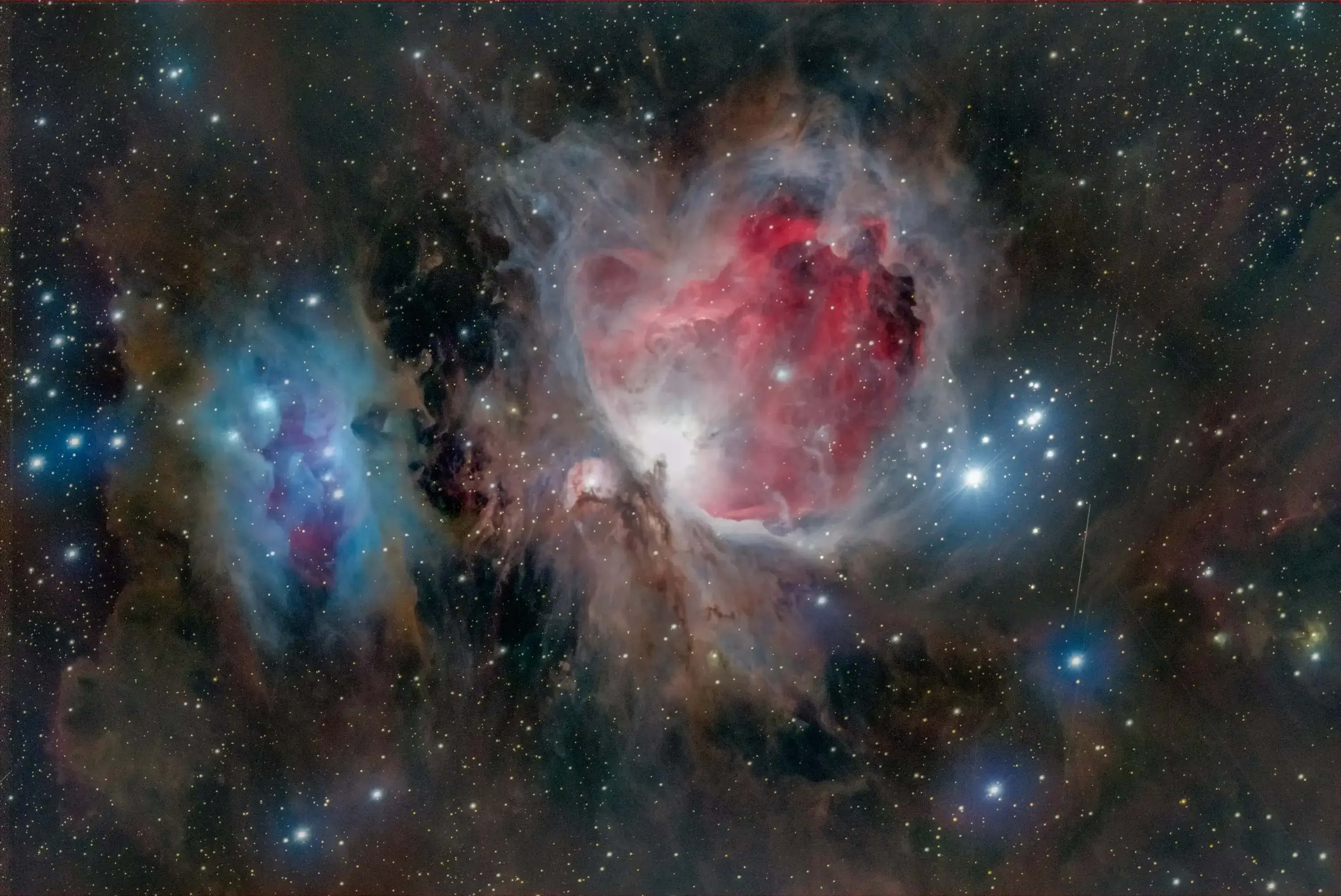
See the pink and red glow in the photos? That is hydrogen gas, lit up like a lantern by the newborn stars hiding inside. The dark streaks are dust, getting in the way of the light behind it.
A long, steady life
For most of its life a star is in a tug of war. Gravity squeezes it inward. The energy from fusion pushes outward. Neither side wins, so the star stays steady and shines. Astronomers call this stage the main sequence. Our Sun is about 4.6 billion years old and only halfway through, so there is no need to worry.
Here is a surprise: the biggest stars live the shortest lives. A heavy star burns hot, bright and fast, and is finished in a few million years. A small star sips its fuel slowly and can glow for trillions of years. You can tell which is which by colour. The hottest stars are blue-white, stars like the Sun are yellow-white, and the coolest stars are red.
Two ways to end
One day the hydrogen in the middle runs out, and the tug of war is over. What happens next depends on how heavy the star is. Pick a star below and see how its story ends.
- Mass
- 1 × the Sun
- Kind of star
- A star like the Sun
- Lifetime
- About 10 billion years
- How it ends
- Swells into a red giant, then sheds its outer layers as a planetary nebula.
- What is left
- A white dwarf
The numbers are approximate: the lifetime is a rule of thumb, and the dividing lines between endings are not sharp.
- Nebula A cloud of gas and dust
- Protostar Gravity gathers a hot core
- Star Fusion begins: the main sequence
Then the star's mass decides
Stars like the Sun
Up to about 8 times the Sun's mass
- Red giant Swells to a hundred times its size
- Planetary nebula Outer layers drift into space
- White dwarf An Earth-sized ember that cools
Massive stars
More than about 8 times the Sun's mass
- Red supergiant Fuses heavier elements, up to iron
- Supernova The core collapses; the star explodes
- Neutron star or black hole What the collapsed core becomes
The gas returns to space, and becomes part of new nebulae.
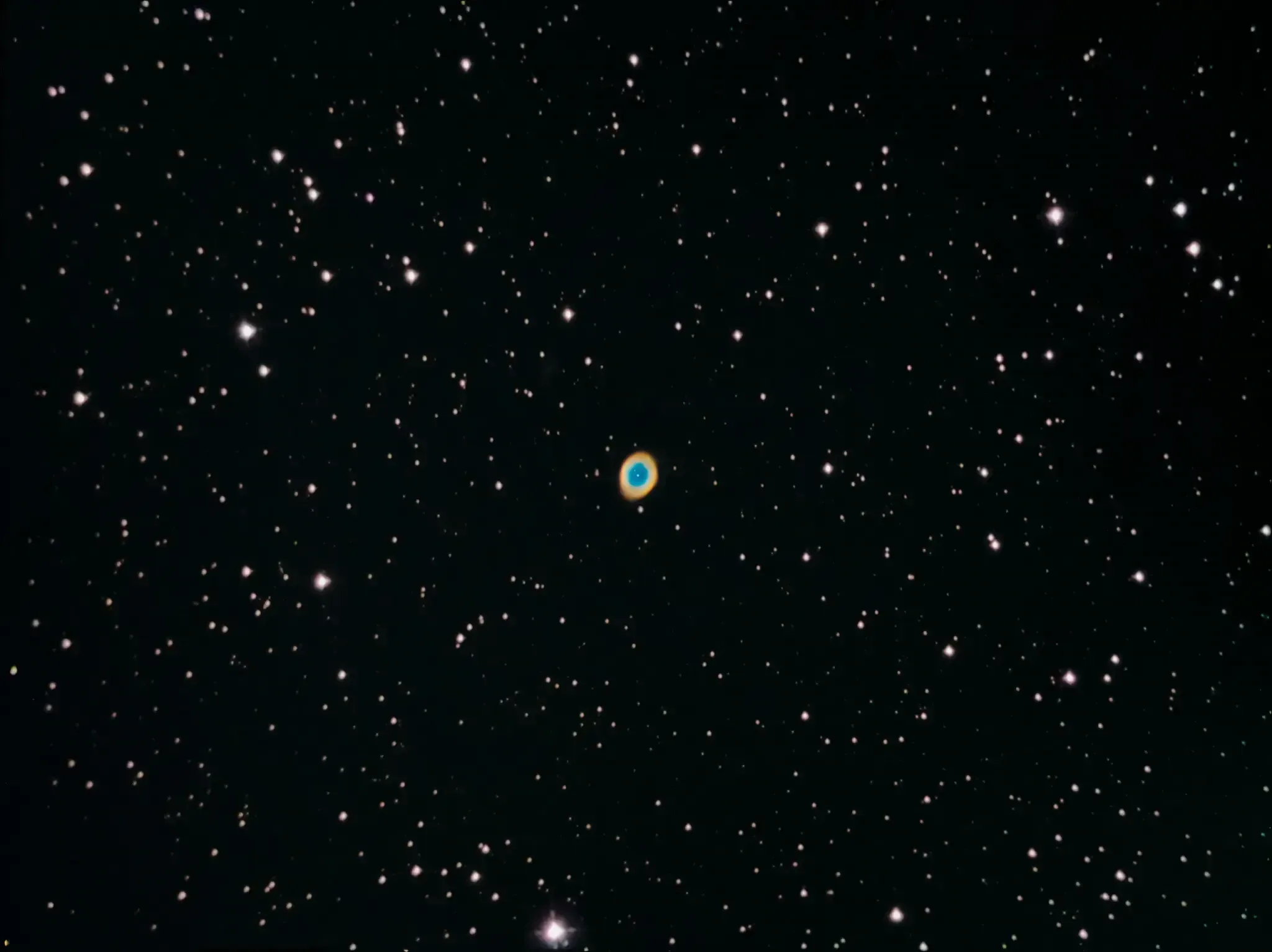
Stars like the Sun: A star up to about eight times as heavy as the Sun swells up like a balloon into a red giant, a hundred times wider than before. Then it gently blows its outer layers into space, like a giant smoke ring. That glowing ring is called a planetary nebula. It is a silly name, because it has nothing to do with planets. Long ago, through small telescopes, it just looked like one. Left behind in the middle is a white dwarf, a star squashed to the size of the Earth, slowly cooling like an ember after a fire.
Massive stars: A star more than about eight times as heavy as the Sun goes out with a bang. First it becomes a red supergiant, cooking up heavier and heavier elements inside, all the way to iron. Then, in less than a second, its middle collapses and the whole star explodes as a supernova. For a few weeks that one star outshines billions of others. What is left is a neutron star, a ball only about 20 kilometres wide but heavier than the Sun. And if the star was really enormous, it leaves a black hole, with gravity so strong that not even light can get out.
Stars that breathe: Cepheids
Some giant stars do not shine steadily. They swell and shrink, growing brighter and dimmer again and again, like slow breathing. These are Cepheid variable stars, and one full breath takes from a day to a few months.
In 1912 the astronomer Henrietta Leavitt studied these stars on photographic plates at Harvard and found a rule: the slower a Cepheid pulses, the more powerful it truly is. That turns every Cepheid into a lamp of known brightness. Time its pulse and you know how bright it really is. Compare that with how faint it looks and you know how far away it is, the same way you judge the distance of a motorbike at night from how dim its headlight looks.
Leavitt's rule gave astronomers their first way to measure distances beyond our galaxy. It is how we learned that the universe is full of other galaxies, and that it is expanding.
- One pulse
- 10 days
- Size
- About 67 times as wide as the Sun
- True brightness
- About 3,600 times the Sun
- What that means
- Bright enough to be seen in other galaxies.
The star is drawn to scale: a slow Cepheid is a far bigger star, as well as a brighter one. Its pulse is speeded up so you can watch it (a real one takes days) and its swelling is exaggerated. The size and brightness are approximate.
Stars that tick: pulsars
Remember the neutron star, the crushed core left behind by a supernova? It is only about 20 kilometres wide, and it spins. Many spin once a second; some spin hundreds of times a second. A neutron star sends out two narrow beams of radio waves, and as it spins the beams sweep around the sky like the lamp of a lighthouse. If a beam crosses the Earth, we receive a pulse, then another, then another, as regular as a clock. Such a star is called a pulsar.
Jocelyn Bell discovered the first one in 1967 with a radio telescope made of wooden posts and wire. There is more about it in Chapter 6. On metres of paper chart she noticed a tiny smudge that returned every 1.3 seconds. It was so regular that the team jokingly labelled it "LGM", for "little green men", before they understood it was a spinning star.
- One turn takes
- 1.34 seconds
- Pulses we receive
- About 45 a minute
- Compare
- A little slower than a resting heartbeat.
The small dot at the top is the Earth: it lights up each time the beam sweeps past. Only the beam that points our way is drawn.
Chapter 2
Planets
Making a star is messy work, and there are always leftovers. Those leftovers, the gas and dust the new star did not use, are what planets are made of. Yes, that includes the one you are standing on.
Built from the leftovers of stars
When stars die, they do not keep their treasures. Planetary nebulae and supernovae scatter the stars' gas back into space, now sprinkled with the heavier elements made inside them: carbon, oxygen, silicon, iron. That stardust mixes into new clouds, and new stars and planets are born from it. The rocks under your feet, the iron in your blood and the calcium in your teeth were all made inside stars that died before the Sun was born. You are made of stardust. Really.
A disc around a young star
A cloud that is turning into a star is always spinning a little. As it shrinks it spins faster and flattens out, the way a ball of dough flattens when a cook spins it. So the newborn star ends up with a wide, flat disc of gas and dust around it. Inside the disc, specks of dust bump into each other and stick. Specks become pebbles, pebbles become rocks, and rocks become lumps a few kilometres wide called planetesimals. Gravity pulls those together into planets. It takes patience: tens of millions of years.
- A cloud collapses Gravity pulls gas and dust inward
- A disc forms The spinning cloud flattens around the new star
- Dust clumps together Grains grow into pebbles, rocks and planetesimals
- Planets remain Rocky ones near the star, giants farther out
Near the star it is too warm for ice, so only small rocky planets can form: Mercury, Venus, Earth and Mars. Farther out it is freezing cold. Ice joins the building material, and the planets grow so big that they can hold on to thick blankets of gas: Jupiter, Saturn, Uranus and Neptune.
That is why all the planets go around the Sun the same way, almost on the same flat track, like runners on one racecourse. They were all made from the same spinning disc, about 4.6 billion years ago. And the Sun is not special: astronomers have already found thousands of planets around other stars. Who knows what is out there?
Planets through our telescopes
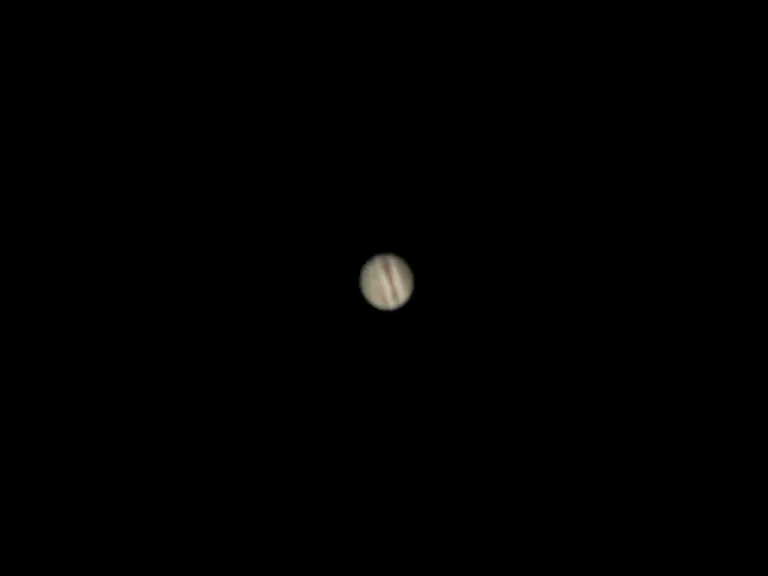
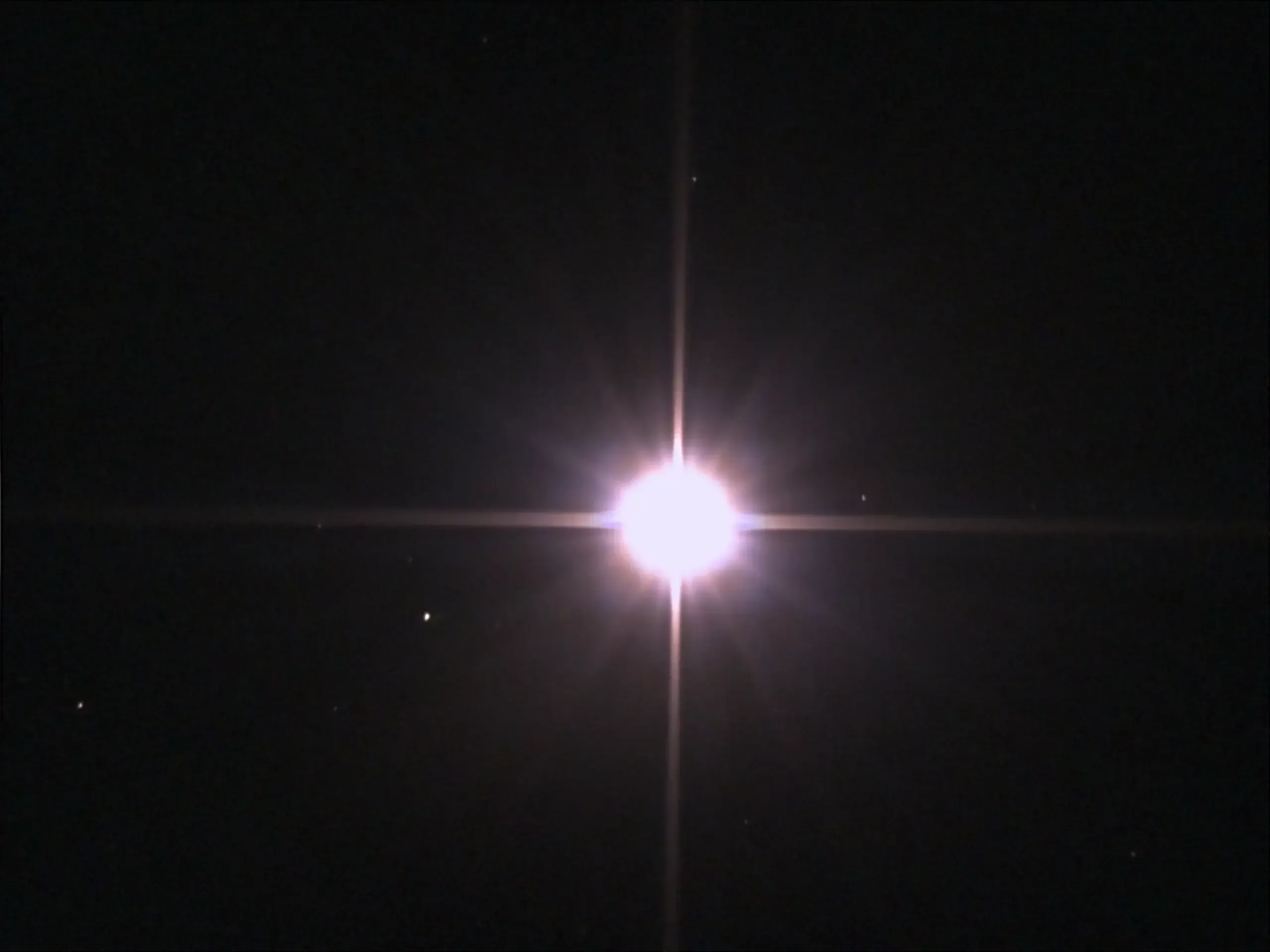
Planets have no light of their own. They shine because sunlight bounces off them, the way the Moon does. Here is a trick for spotting one: stars twinkle, planets do not. Dūrbin students have photographed three of them from Bangladesh. Can you find one in the sky tonight?
Chapter 3
Star clusters
Stars hardly ever grow up alone. One cloud makes hundreds or thousands of stars at the same time, like one tree dropping a whole crop of mangoes. A group of stars that stays together is called a star cluster.
Born together
The stars in a cluster are brothers and sisters. They came from the same cloud at the same time. So they are all the same age, they are all about the same distance from us, and they are made of the same ingredients. Only one thing is different: some are heavy and some are light.
That makes a cluster a perfect science experiment, set up by nature. Astronomers compare the heavy stars with the light ones and see exactly what a star's weight does to its life. Much of what you read in Chapter 1 was worked out this way. There are two kinds of cluster, and they could not be more different.
| Open cluster | Globular cluster | |
|---|---|---|
| Number of stars | A few dozen to a few thousand | Hundreds of thousands, up to millions |
| Age | Young: a few million to a few billion years | Ancient: 10 to 13 billion years |
| Shape | Loose and irregular | A dense ball, crowded at the centre |
| Colour | Often blue-white, from hot young stars | Yellow and red, from old stars |
| Where | In the disc of the galaxy, near gas and dust | In the halo, all around the galaxy |
| Future | Drifts apart within a few hundred million years | Held together by gravity for billions of years |
Open clusters
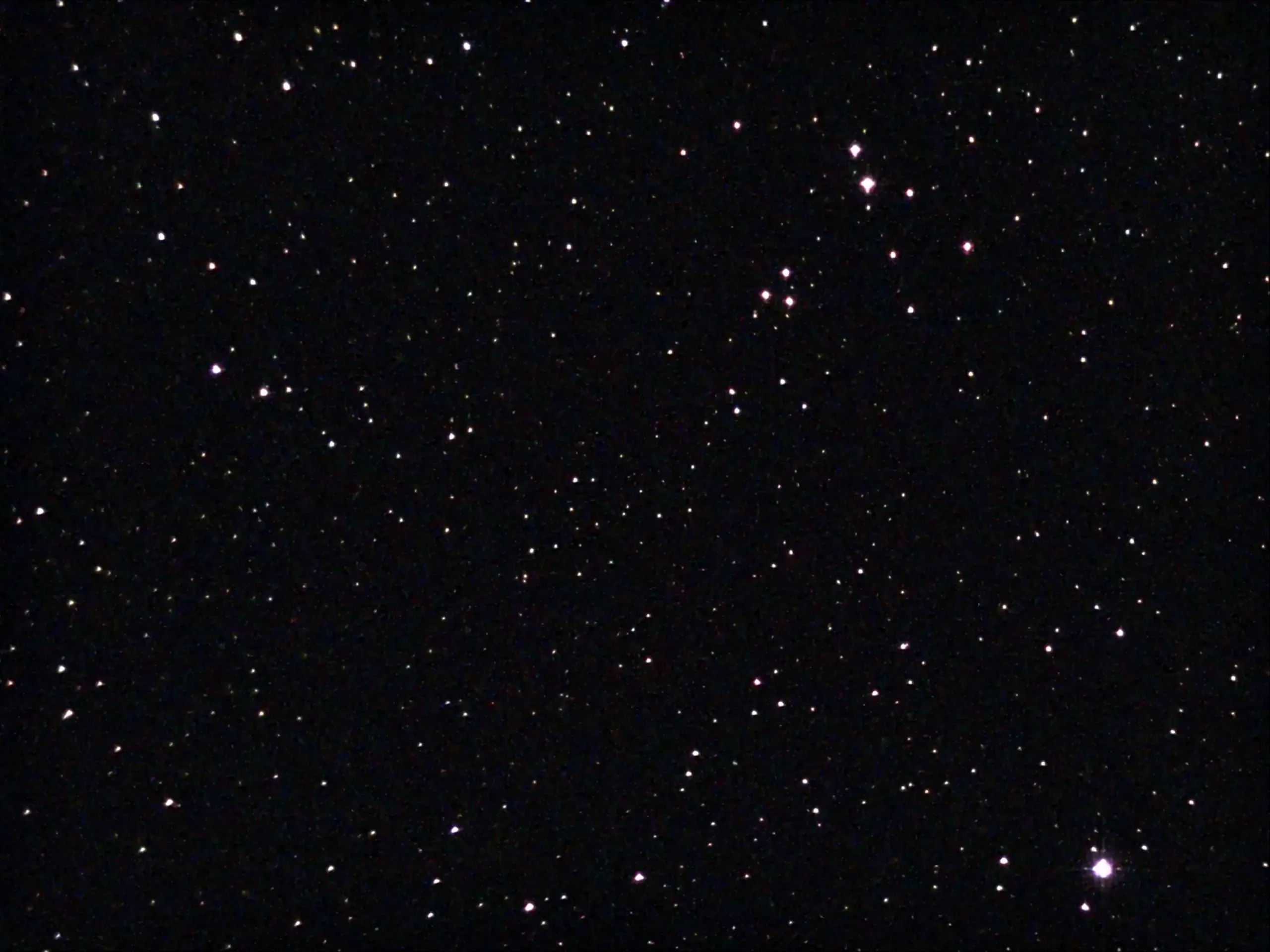
An open cluster is a loose, friendly crowd of up to a few thousand young stars. It lives in the flat part of the galaxy, where new stars are still being made. Its gravity is too weak to hold everyone together for long. Over a few hundred million years the stars wander off, one by one, to live on their own. Our Sun probably grew up in a cluster like this and left home long ago.
Globular clusters
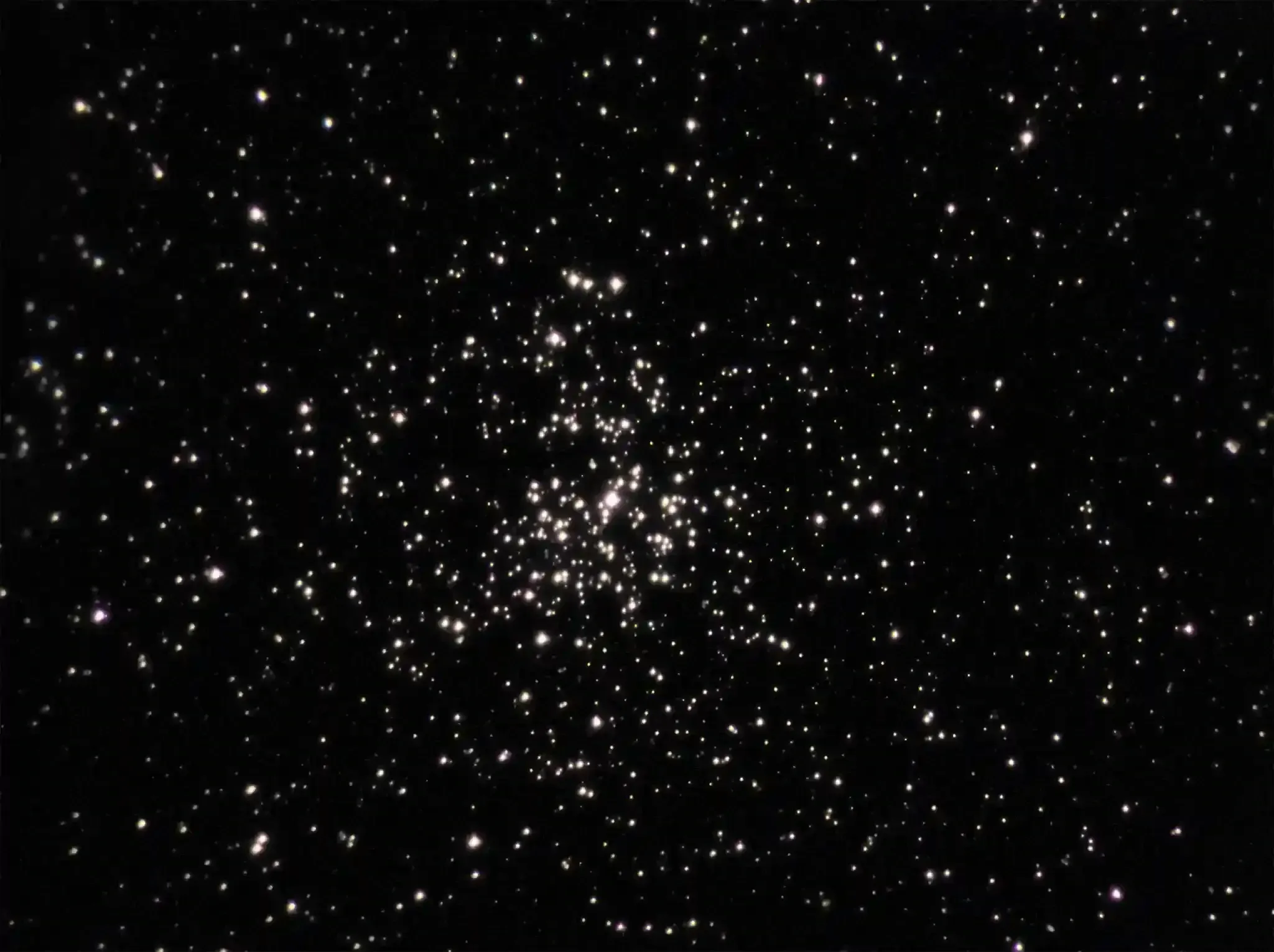
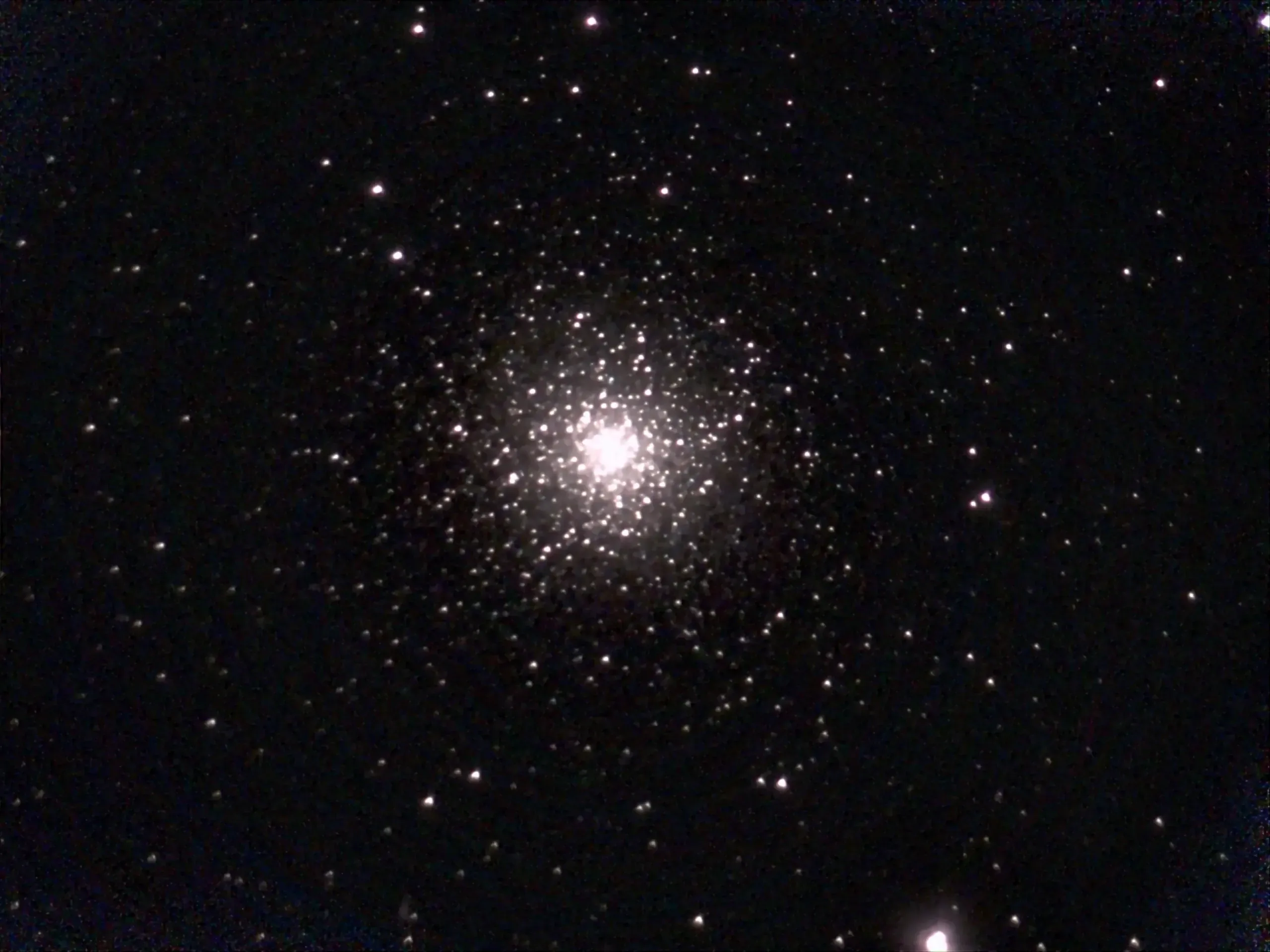
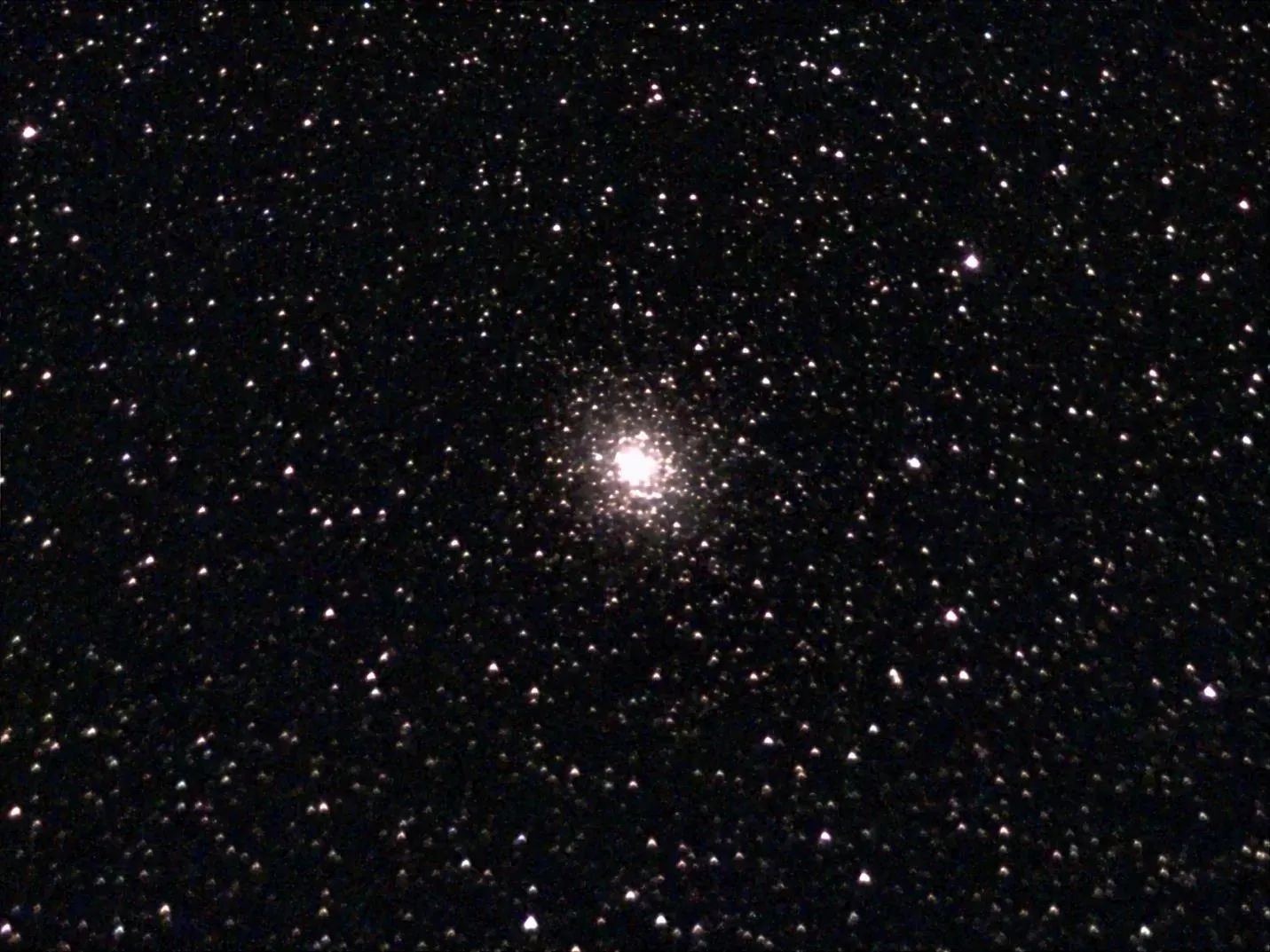
A globular cluster is something else entirely: a giant ball of hundreds of thousands of stars, packed so tightly that its gravity has held it together for billions of years. If you lived on a planet inside one, your night sky would blaze with stars. The Milky Way has more than 150 of these balls circling around it. Their stars are the grandparents of the galaxy, 10 to 13 billion years old, nearly as old as the universe itself.
Chapter 4
Galaxies
Now zoom all the way out. A galaxy is a gigantic island of stars, gas, dust and a mysterious thing called dark matter, all held together by gravity. Every nebula, star, planet and cluster you have met so far lives inside one.
Our galaxy, the Milky Way
Our home galaxy is called the Milky Way. It has a few hundred billion stars. If you counted one every second, you would need thousands of years. They sit in a flat, spinning disc so wide that light takes about 100,000 years to cross it. The Sun lives in the disc, about 26,000 light-years from the middle, and takes roughly 230 million years to go around once. The last time we were at this spot, the dinosaurs were just getting started.
Because we live inside the disc, we cannot see its shape. We see it from the side, as a pale, milky band of light across a dark night sky. That is where the name comes from. The dark patches in it are clouds of dust.
What a galaxy is made of
Here is a galaxy like ours, seen from the side. It has four ingredients. Tap each one to see where it hides and what it does.
Stars
The Milky Way has a few hundred billion. Young, blue stars trace the spiral arms of the disc. Older, redder stars fill the central bulge and the halo around it, where the globular clusters orbit.
Gas
Mostly hydrogen, spread through the disc. It is the raw material for new stars: where it gathers into dense clouds, nebulae form. In the Milky Way the gas adds up to roughly a tenth of the mass of the stars.
Dust
Tiny solid grains mixed in with the gas, made of elements from earlier generations of stars. There is very little of it, about a hundredth of the mass of the gas, but it blocks starlight. It causes the dark lanes across the Milky Way and across many galaxy photographs.
Dark matter
Stars in the outer parts of a galaxy orbit faster than the gravity of everything we can see would allow. Vera Rubin showed this in the 1970s, galaxy after galaxy. Something invisible supplies the extra gravity. Astronomers call it dark matter. It gives off no light, nobody yet knows what it is made of, and it accounts for most of a galaxy's mass, in a halo reaching far beyond the visible disc.
How do we know dark matter is there?
Swing a ball around on a string. The faster it goes, the harder you have to hold on. Let go, and it flies away. Stars circling a galaxy are the same, with gravity as the string. The faster a star moves, the more gravity is needed to hold it, and gravity comes from matter.
So the speed of the stars tells us how much matter a galaxy has, even matter we cannot see. In the 1970s Vera Rubin measured those speeds in galaxy after galaxy. Press the two buttons to see what everyone expected, and what she found.
What everyone expected
Most of a galaxy's light comes from near its centre, so most of its matter was thought to be there too. Then a star far from the centre should feel a weak pull and move slowly, just as the far planets creep around the Sun while the near ones race. Watch the red star, far outside the bright galaxy: it should crawl around.
What Vera Rubin measured
The far red star races around as fast as the stars near the centre. The gravity of everything we can see is far too weak to hold a star moving that fast: it should fly off into space, like the ball when its string snaps. But it stays. So something we cannot see is adding a great deal of gravity. That something is dark matter, and its halo is far, far bigger than the galaxy we see.
The same red star, at the same distance in both pictures. The difference in speed is drawn a little larger than life, to make it easy to see.
The answer was the same in every galaxy. To hold on to its stars, a galaxy needs several times more matter than all its stars, gas and dust put together. This extra matter cannot be seen in any kind of light. We only feel the pull of its gravity.
Dark matter is not a black hole
People often mix these two up, because both sound dark. They are very different things.
| Black hole | Dark matter | |
|---|---|---|
| With light | Traps it. Light that falls in can never get out. | Ignores it. Light passes straight through. |
| What it is | Ordinary matter crushed into a tiny space, usually a dead massive star. | A different kind of matter. Nobody yet knows what. |
| Size | Tiny: a dot inside a galaxy. | Enormous: a cloud bigger than the whole galaxy. |
| How we find it | Hot gas glows as it falls in, and nearby stars whip around it. | Only by the pull of its gravity on stars and galaxies. |
A black hole traps light. Dark matter does not notice light at all.
Kinds of galaxy
Galaxies come in different shapes. Spiral galaxies, like ours, are flat discs with curling arms full of gas, dust and young stars, like a pinwheel. Elliptical galaxies are smooth, round balls of old stars that have nearly stopped making new ones. Irregular galaxies have no tidy shape at all. Galaxies tug on each other, and sometimes two crash together, very slowly, and become one. And how many galaxies are there? In the part of the universe we can see, hundreds of billions. Every one of them is full of stars, and maybe planets, waiting for someone to look.
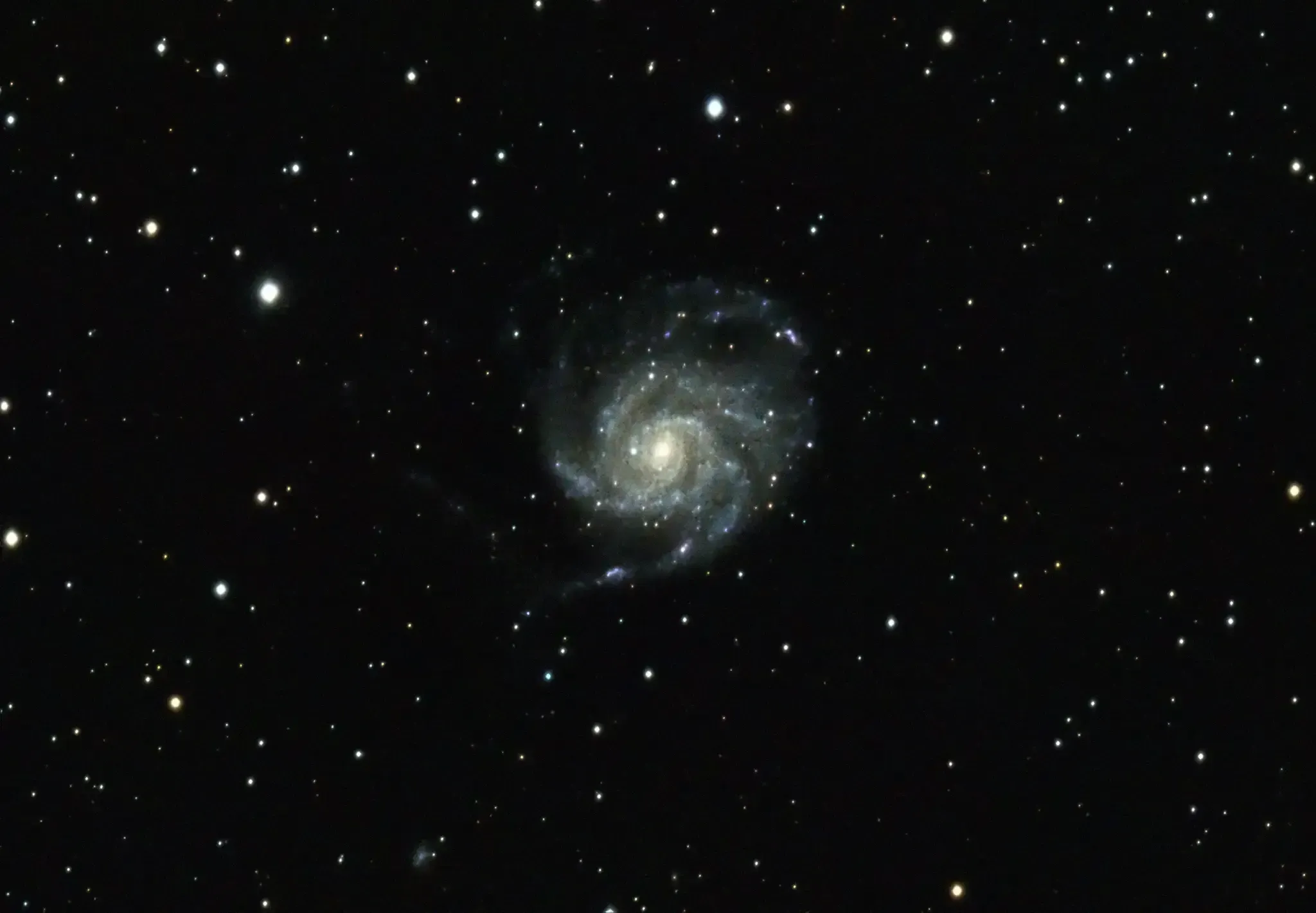 Pinwheel Galaxy A spiral galaxy, seen face-on. Ashratul Zannati Purnota · Utah, USA (iTelescope)
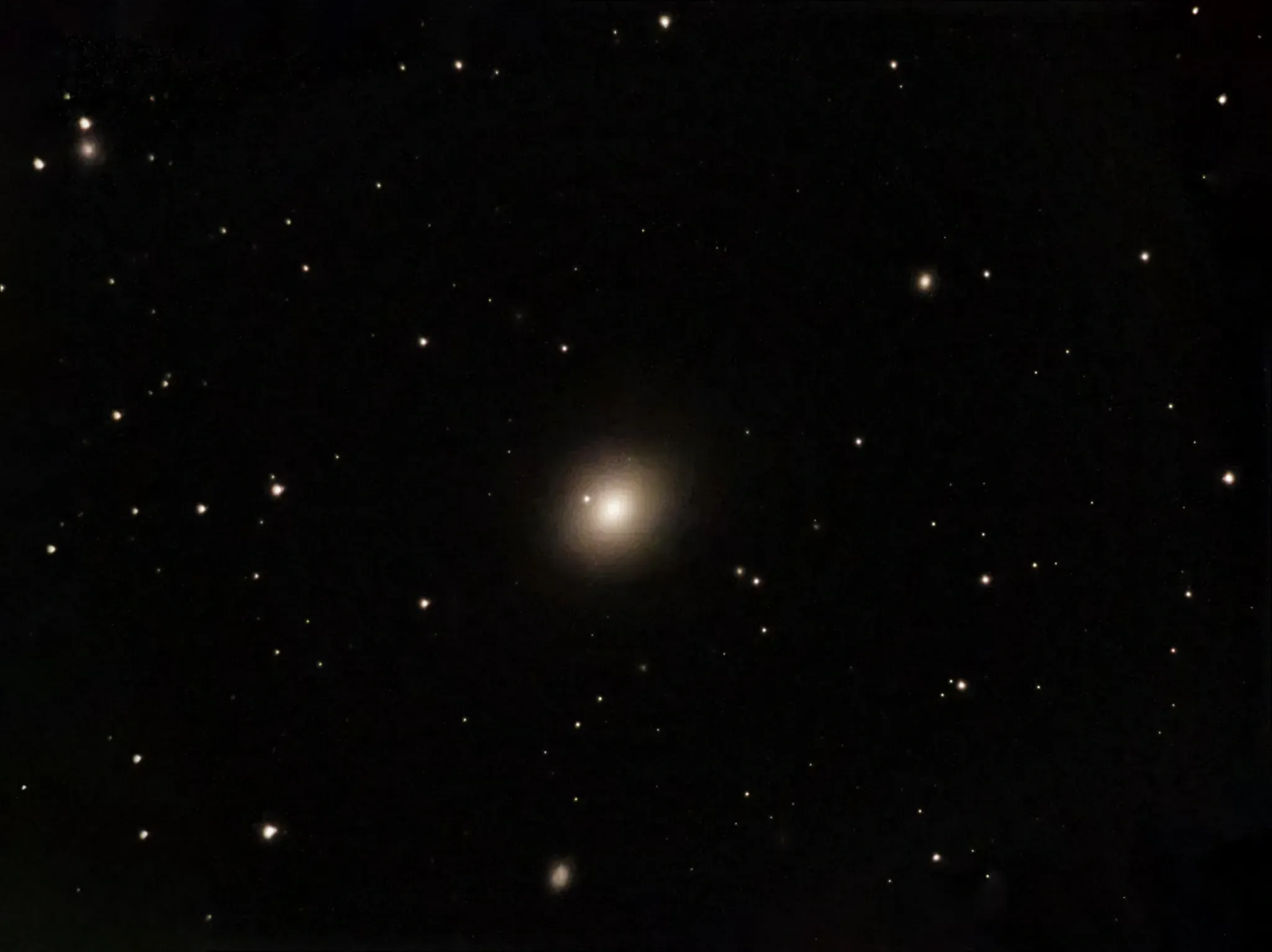 Messier 49 An elliptical galaxy: a smooth ball of old stars. Yead Muhammad Ivan · Kishoreganj
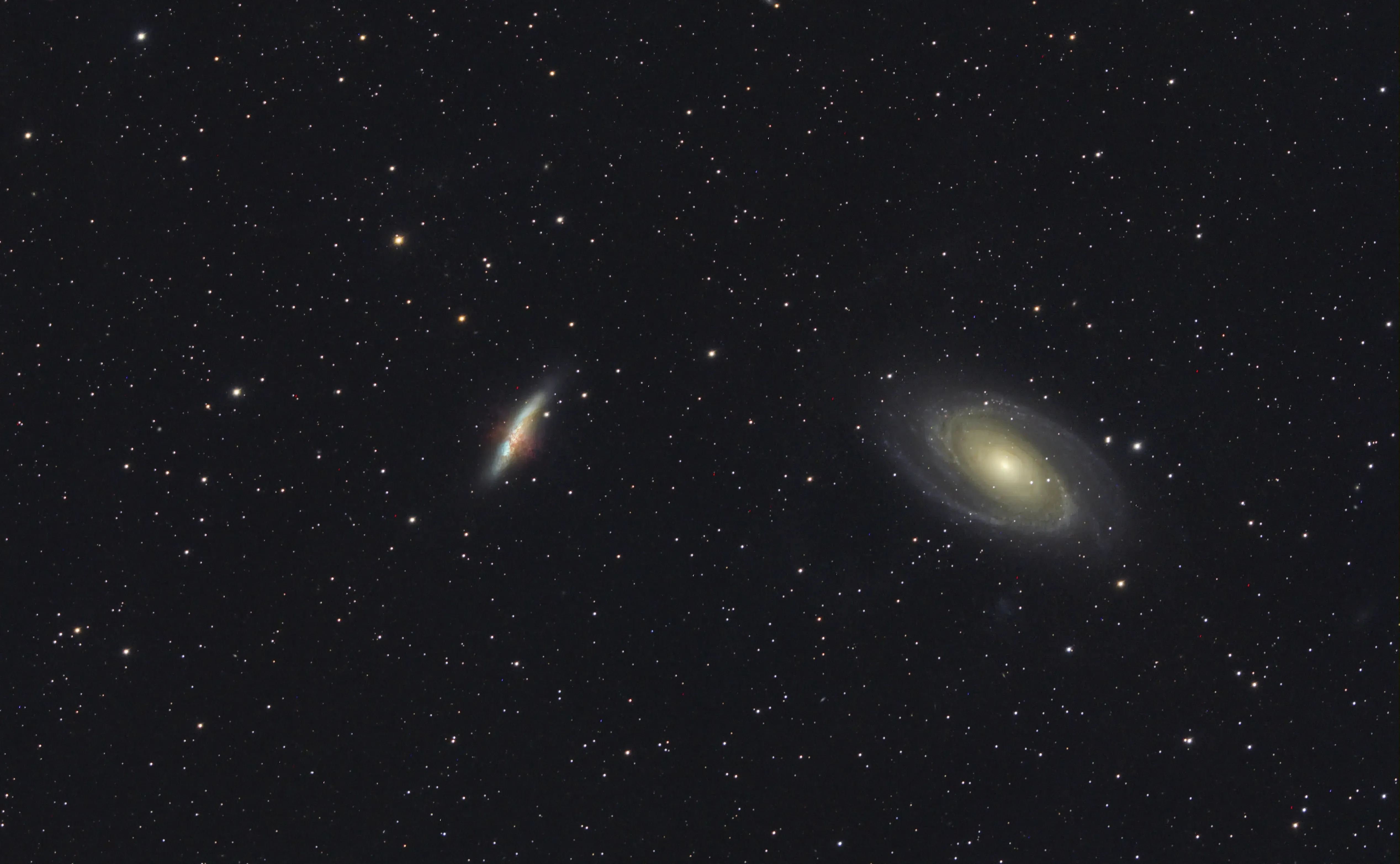 Bode's and Cigar Galaxies Two neighbouring galaxies that tug on each other. Md Shahadat Hossain Shahal · Utah, USA (iTelescope)
Putting it together
From small to large
Ready for the big picture? Each step below is thousands of times bigger than the one before. Space is so large that we measure it in light-years: the distance light travels in one year, about 9.5 trillion kilometres. Now you know what is up there. Go outside tonight and look.
- A planet About 12,700 km across The Earth
- A star and its planets About 9 billion km across The Solar System out to Neptune: light crosses it in about 8 hours
- A star cluster Tens to hundreds of light-years across Thousands to millions of stars born together
- A galaxy About 100,000 light-years across The Milky Way: a few hundred billion stars
Chapter 5
Light
How do we know all this? We cannot visit a star, weigh a nebula or touch a galaxy. Almost everything in the chapters above, we learned from light. So now we look at light itself.
Light is a messenger from the past
Light is the fastest thing there is: about 300,000 kilometres every second. Even so, space is so big that light needs time to cross it. Light from the Moon takes a little over one second to reach us. Light from the Sun takes about eight minutes. The light in our photograph of the Orion Nebula left it about 1,300 years ago, and the light from the Pinwheel Galaxy set out about 21 million years ago.
So a telescope is also a time machine. The farther away you look, the further back in time you see.
More light than the eye can see
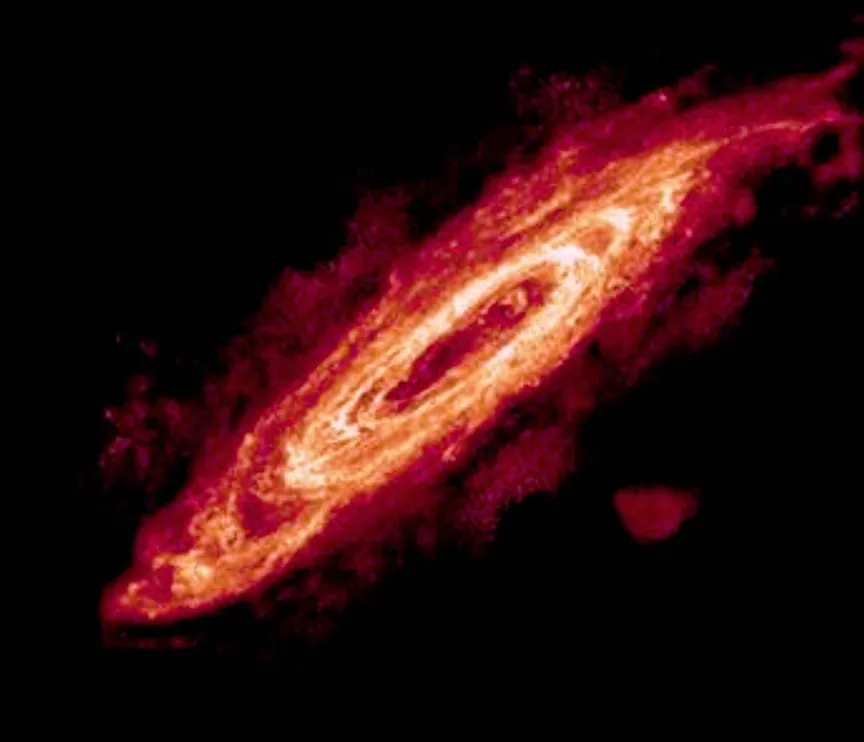
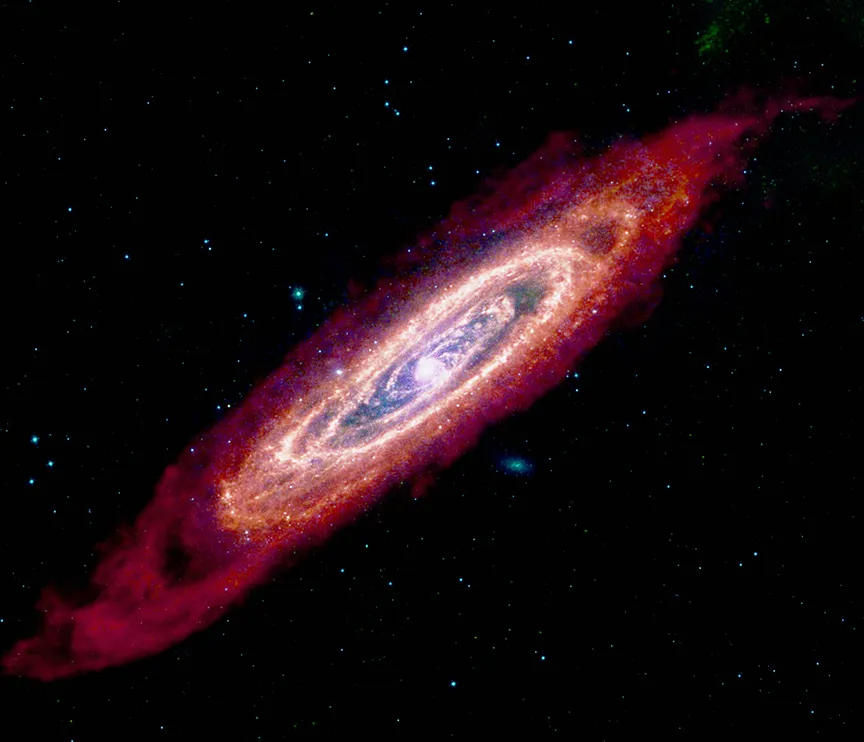
Light travels as a wave. The colour we see depends on the length of the wave: red light has longer waves, blue light has shorter ones. But the rainbow our eyes can see is only a thin slice of all the light there is. Beyond red there is infrared, microwaves and radio. Beyond violet there is ultraviolet, X-rays and gamma rays. Together they are called the electromagnetic spectrum, and you already use most of it every day. Slide along it below.
One wave is as long as
Sent by
Caught by
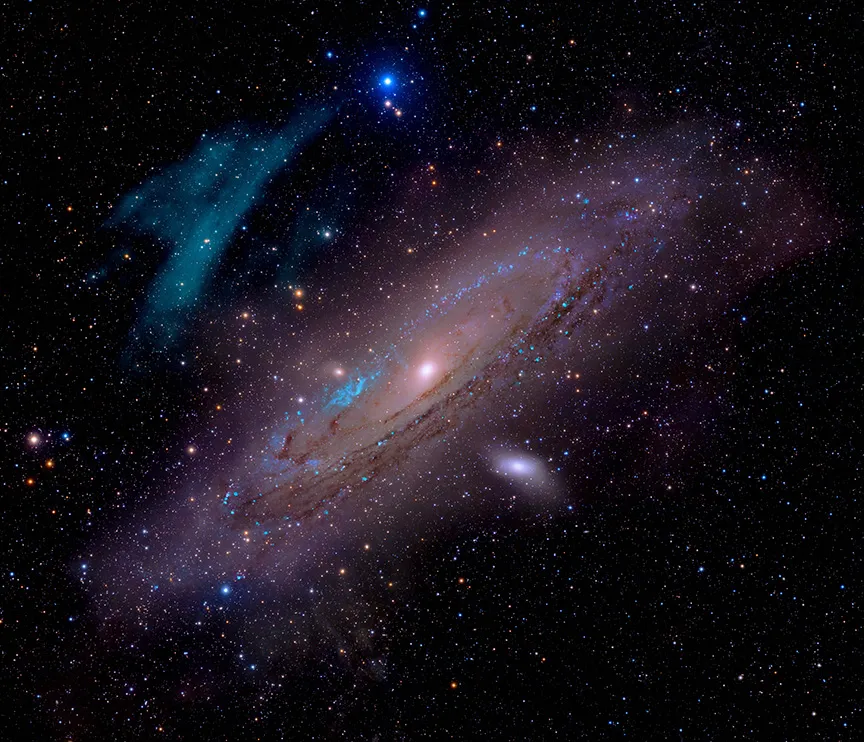
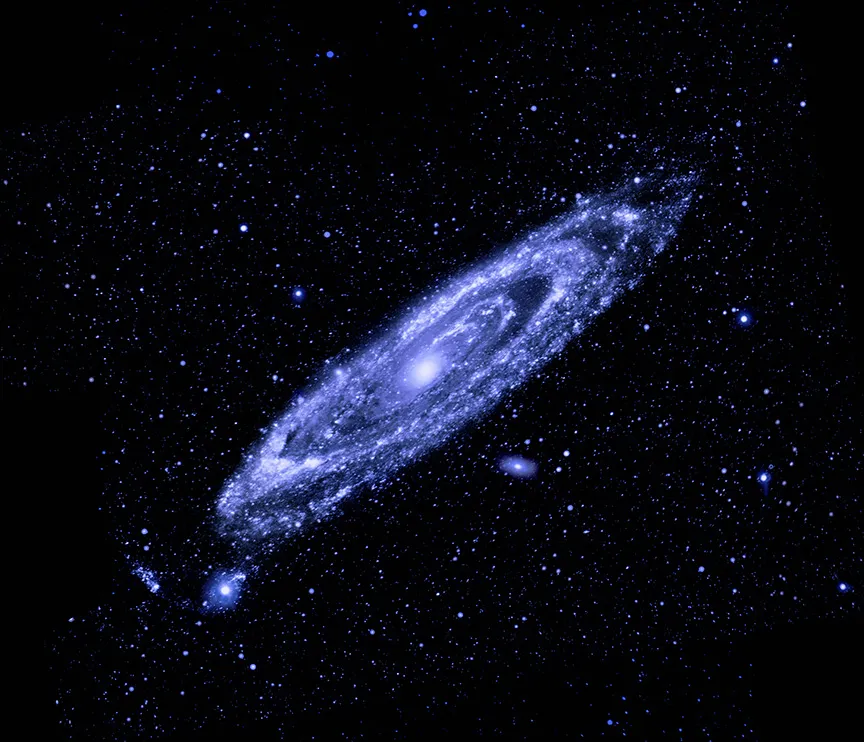
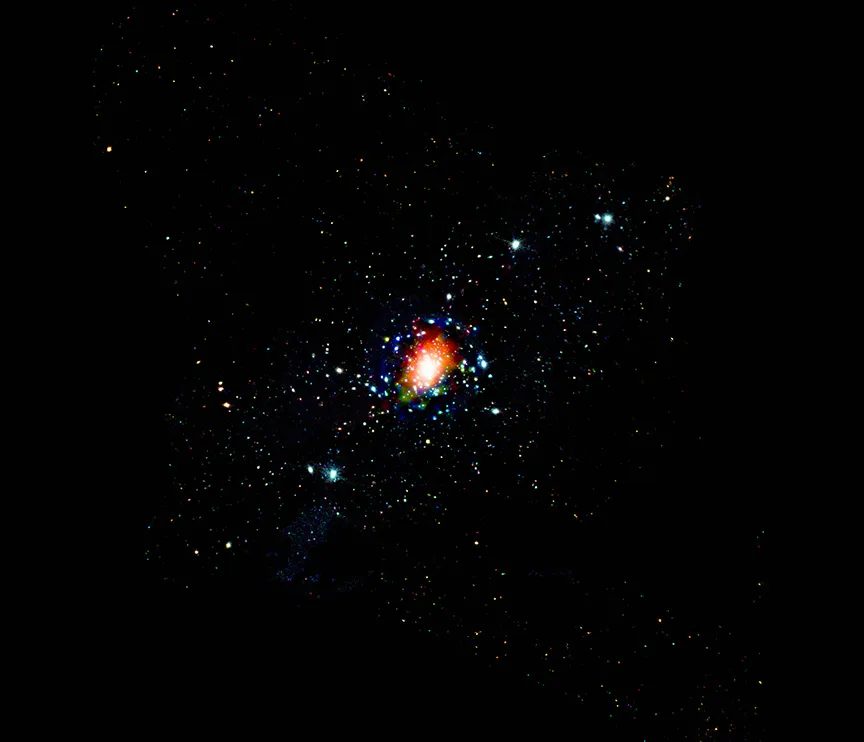
Visible Reaches the ground
- One wave is as long asA germ
- Sent byStars like the Sun, and glowing nebulae
- Caught byTelescopes like ours, and your own eyes
In daily life: Everything you see: sunlight, a rainbow
Each kind of light shows a different side of the same sky. A cloud that is dark and empty in visible light can be bright in infrared or radio. That is why astronomers build so many kinds of telescope, and why some of them have to fly above the air: the atmosphere blocks most of these kinds of light, and lets through mainly visible light and radio waves.
How matter meets light
Astronomers spread light out into its colours, like a rainbow, and read it like a barcode. This spread-out light is called a spectrum. Different things in the sky leave different marks on it. Pick one below, and find it in our photograph of the Orion Nebula.
A star: every colour at once
A star is a ball of hot, dense gas, and anything hot and dense glows in every colour at once. Spread out, its light makes a smooth rainbow, called a continuous spectrum. Hotter stars are bluer and cooler stars are redder. Look closely and there are thin dark lines too: the star's own outer layers take out a few exact colours, and those lines tell us what the star is made of.
Like: the glowing wire in an old light bulb, or a piece of charcoal in a fire.
A nebula: only a few exact colours
A nebula is thin gas, lit up by the stars inside it. Thin gas does not glow in every colour. Each kind of atom shines in its own few colours, like a fingerprint: hydrogen in deep red, oxygen in blue-green. This is called an emission spectrum, and it is why nebulae in our photographs are so often red.
Like: a neon shop sign, or an orange sodium street lamp. Each gas has its own colour.
Dust: it blocks light, blue most of all
Dust in space is tiny grains, finer than smoke. It gives off no visible light. It absorbs and scatters the light of whatever is behind it, and it removes blue light more than red. So a thick dust cloud looks like a dark hole in the sky, and stars seen through thin dust look dimmer and redder than they really are. Infrared light passes through, which is how telescopes look inside dusty clouds.
Like: smoke or haze. The Sun turns red at sunset because its light crosses more air and dust.
Dark matter: nothing at all
Dark matter does not glow, does not block light and does not reflect it, in any kind of light from radio to gamma rays. Light passes straight through it. We know it is there only because of its gravity. In the 1970s the astronomer Vera Rubin measured how fast stars circle their galaxies and found them moving far too fast for the matter we can see. There had to be much more matter, invisible.
Like: the wind. You never see it, only the things it moves.
Chapter 6
Telescopes and cameras
A telescope does not bring the stars closer. It does two simpler things: it collects more light than your eye can, and it shows finer detail. A camera then keeps that light.
A telescope is a light bucket
Put a cup and a wide bucket out in the rain. The bucket catches more water, simply because its opening is bigger. Light from the sky falls on us like a very thin rain, and a telescope is a bucket for it. The opening of your eye, the pupil, is at most about 7 millimetres wide in the dark. A telescope's mirror or lens is far wider, so it catches far more light and can show things much too faint for the eye.
Because the catching area grows with the square of the width, a mirror twice as wide collects four times the light. Try it.
- Opening
- 114 mm
- Light collected
- About 270 times as much as the eye
- Finest detail
- A coin seen from about 4 km away (1 arcsecond)
- Drawn to scale with
- A cricket ball, 7 cm across
- An example
- Dūrbin's Unistellar eQuinox smart telescopes
The picture is to scale: the circle is the opening, beside an object you know. The detail figure is the best the opening allows. From the ground, the moving air usually blurs things to about 1 or 2 arcseconds, however big the telescope.
Sharper, as well as brighter
A wider opening also shows finer detail. Astronomers call this resolution: how close together two points can be before they blur into one. It is the difference between seeing a headlight in the distance and seeing that it is two headlights.
On the ground there is a limit, and it is the air. Starlight crosses the whole atmosphere on its way down, and the air is always moving. Look at a coin at the bottom of a pond and it shimmers; stars twinkle for the same reason. This is why big telescopes are built on high, dry mountains, and why some are sent into space.
The camera keeps the light
Your eye takes a fresh picture many times a second and throws the old one away. It cannot save up light. A camera can. Leave its shutter open and light keeps piling up on the sensor, second after second, until things far too faint to see appear. The night mode on a phone works the same way.
Astrophotographers go further. They take many exposures and add them together on a computer, a method called stacking. Our photograph of the Orion Nebula is eight exposures of two minutes each: sixteen minutes of light in one picture. The colours are real, but they are too faint for the eye, which mostly sees in grey when the light is dim.
The enemy: light pollution
You cannot hear a whisper in a noisy room. In the same way, you cannot see faint stars in a bright sky. Street lamps, signs and buildings send light upward, and the air scatters it into a glow that hides the stars. This is why Dūrbin students carry telescopes out of the cities to places like the hills of Bandarban. Slide from the city to a dark site and watch the sky fill up.
- The sky
- The darkest places on Earth
- Stars you can see
- About 15,000 at a time
- The Milky Way
- Bright enough to cast faint shadows
Astronomers rate sky darkness on the Bortle scale, from 9 (inner city) to 1 (the darkest places on Earth). The star counts are rough, and the places are examples of each kind of sky.
Four ways our images were taken
The photographs in the gallery and the exhibition come from very different instruments. As you look at each one, check its label for the telescope and the place.
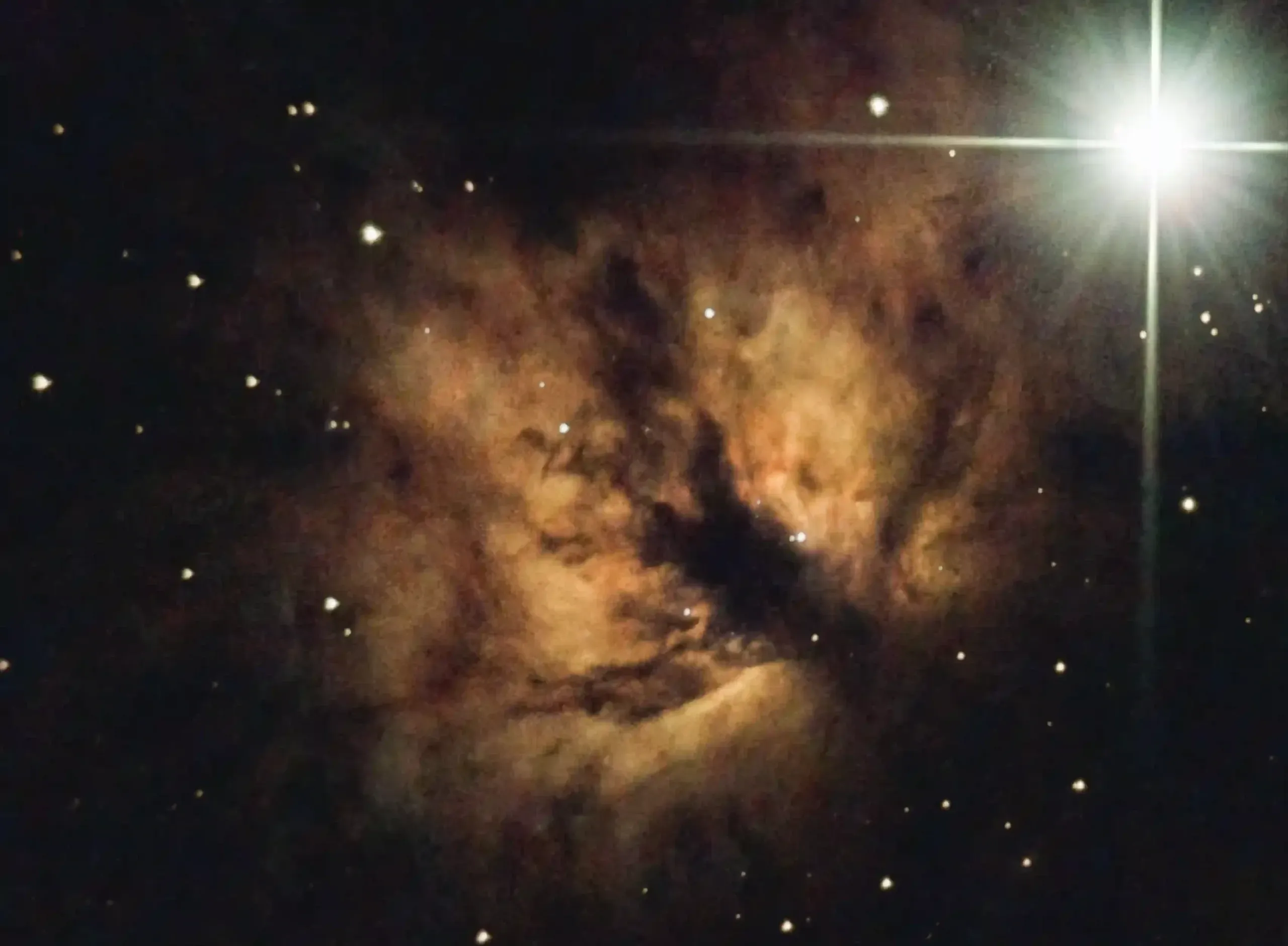 A smart telescope Flame Nebula. Unistellar eQuinox, 114 mm wide, 30 minutes of light, from a dark hill site. Md Shahadat Hossain Shahal · Bandarban A remote telescope Pinwheel Galaxy. A 279 mm telescope in Utah, run over the internet from Bangladesh. Ashratul Zannati Purnota · Utah, USA (iTelescope)
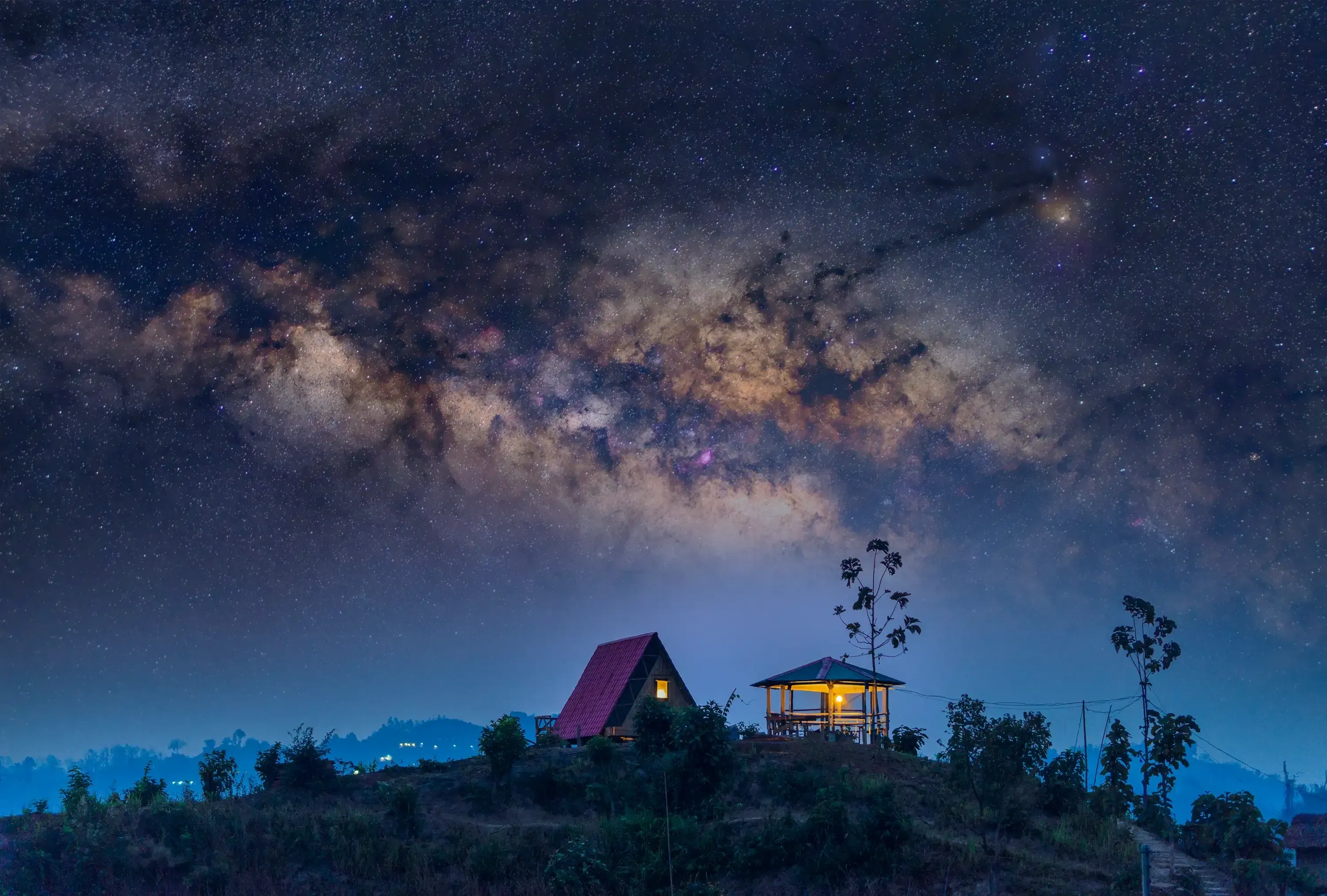 A camera and a lens The Milky Way. No telescope: a camera with a wide lens, and one hour of 10-second exposures. Md Shahadat Hossain Shahal · Bandarban
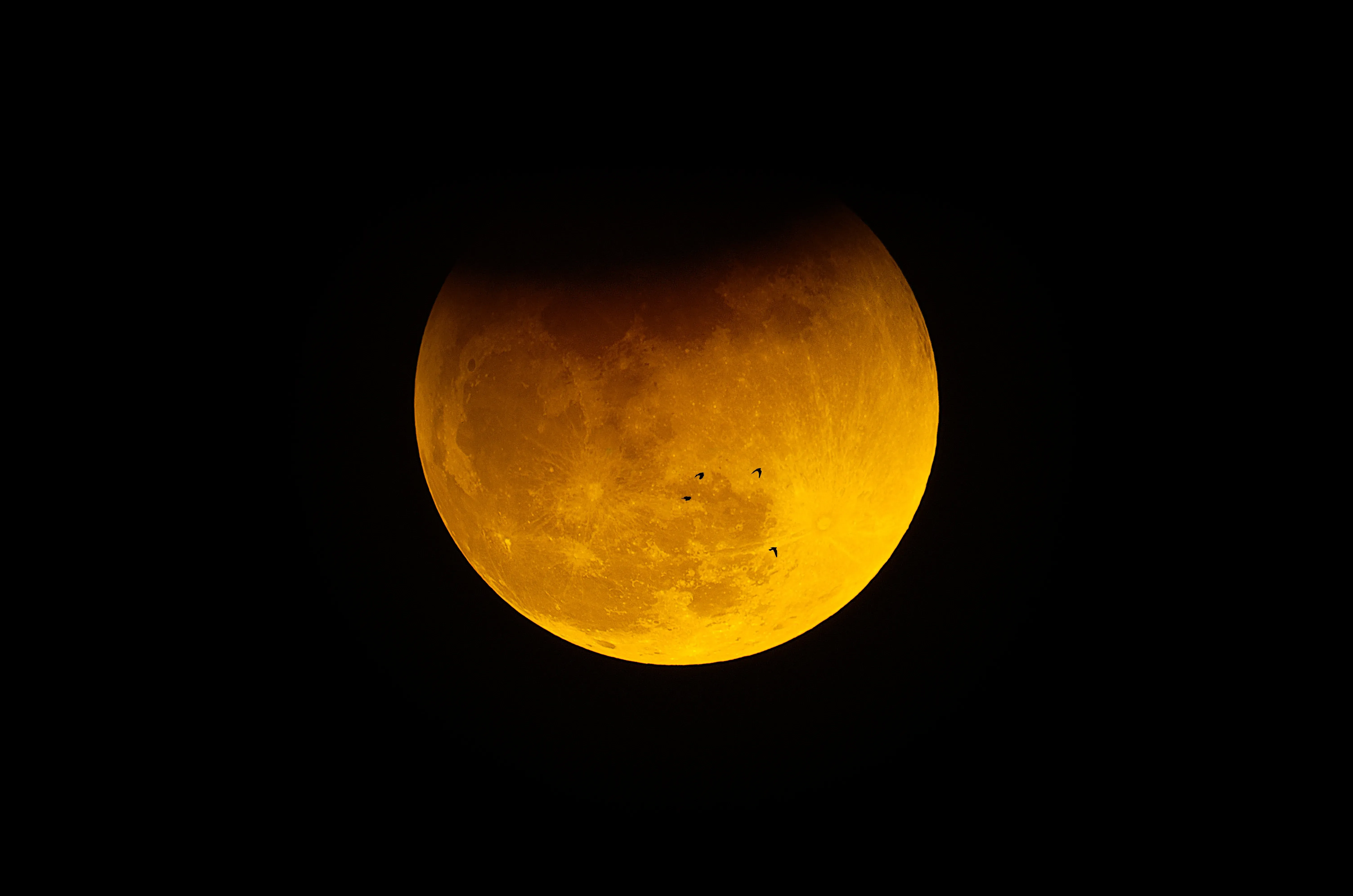 A telescope in the city The Moon. A 200 mm telescope on the IUB rooftop in Dhaka. The Moon and planets are bright enough to photograph from the city. Md Shahadat Hossain Shahal · Dhaka
Telescopes without glass
Not every telescope has a mirror or a lens. Radio waves are light with very long waves, and they are caught with metal dishes and wires, like the dish that brings satellite television to a house. A radio telescope can work in daylight and through cloud. There is one on the roof of the building at IUB.
One of the most famous radio telescopes did not look like a telescope at all. In 1967, at Cambridge in England, a student named Jocelyn Bell (now Dame Jocelyn Bell Burnell) helped build one from about a thousand wooden posts and more than 190 kilometres of wire and cable, spread over a field the size of 57 tennis courts. With it she discovered a new kind of star, the pulsar. You met it in Chapter 1.